OJO / CODING AGENT WORKFLOW / DEEPSEEK
Turn DeepSeek Requirements into an OJO PrototypeMove from dense text to a decision-ready interface.
Use DeepSeek to explore and structure written requirements, then use OJO to turn the accepted scope into an editable product flow, visual direction, and prototype your team can review before development.
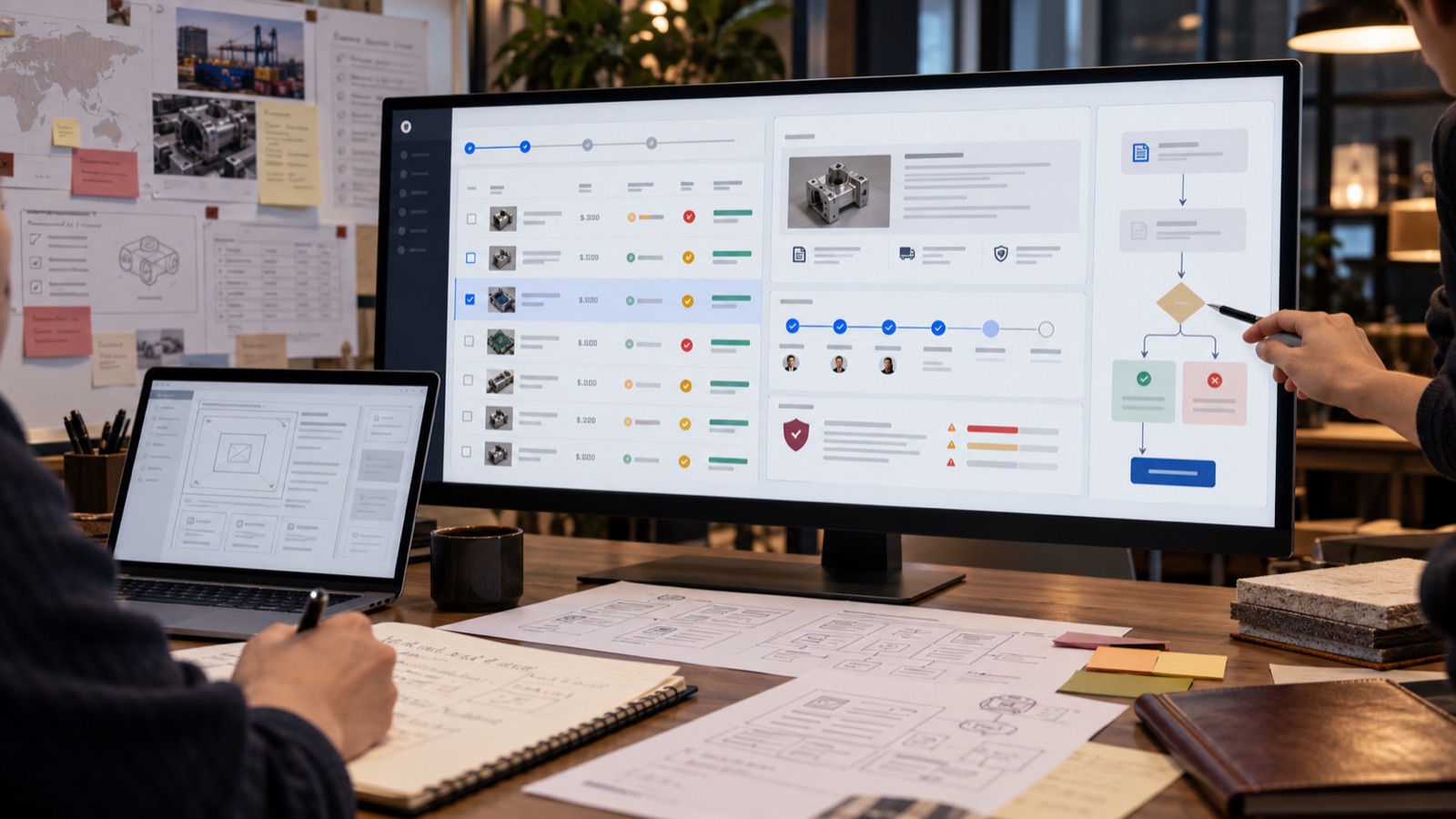
DEEPSEEK + OJO / REQUIREMENTS TO PROTOTYPE
Extract actors, rules, and questions.
Use DeepSeek to organize the source without treating generated wording as verified truth.
Input: interviews + notes + process documentsFollow the requirements from scope to an editable approval flow.
Can a product manager turn a long requirements discussion into a product flow that stakeholders can inspect and challenge?
QUICK ANSWER
How can DeepSeek requirements become a UI prototype?
Use DeepSeek to organize source material, questions, and candidate requirements. Confirm the scope yourself, then use OJO to map the decision flow, information hierarchy, states, and review points into an editable prototype. Treat generated requirements as a draft, not evidence.
- Best for
- Product managers and founders translating written requirements into a reviewable B2B product concept.
- Design output
- A scoped requirements brief, editable product flow, prototype states, and a stakeholder review record.
THINK. MAKE. REVIEW.
Turn requirements into something the team can challenge.
SOURCE is a fictional supplier quote-approval product. The workflow separates requirement drafting from product and design approval.
Your Agent Team applies the right Skills.
- 01
DEEPSEEK DRAFT
Organize the source material.
Summarize actors, decisions, rules, exceptions, and unanswered questions from interviews, notes, and current process documents.
Draft: actors, business rules, open questions.
- 02
HUMAN SCOPE REVIEW
Accept evidence, not fluent wording.
Verify each requirement against the source. Remove invented details, conflicting rules, and features that do not support the approval decision.
Accepted scope: goals, evidence, constraints, non-goals.
- 03
Your Agent Team applies the right Skills.
Map the approval experience.
Turn supplier comparison, risk evidence, review roles, and approval states into a coherent flow and editable interface direction.
Prototype: compare → inspect → approve → record.
- 04
TEAM REVIEW
Test the decision and handoff.
Ask procurement, finance, and operations to challenge missing evidence, role boundaries, and exception handling before implementation.
Review record: accepted flow, exceptions, handoff questions.
WORKFLOW COMPARISON
What OJO adds after DeepSeek structures the requirements.
The gain comes from turning prose into states that people can inspect—not from pretending generated requirements are already correct.
| Decision | DeepSeek requirements draft | DeepSeek + OJO |
|---|---|---|
| Source handling | Organizes and expands written material. | Keeps verified scope and open questions attached to design. |
| Information architecture | Described in prose or lists. | Made visible as hierarchy, flow, roles, and states. |
| Stakeholder review | Comments on a document. | Reviewers challenge a shared interactive artifact. |
| Delivery readiness | Requirement text still needs interpretation. | Accepted states and exceptions clarify the handoff. |
Illustrative workflow comparison. Generated requirements require product, legal, security, and domain review where applicable.
TAKE THE WORK FORWARD
Make the requirement visible before it becomes a ticket.
The prototype gives stakeholders a shared object to review. Final policy, data permissions, supplier claims, and integration behavior still require domain and technical validation.
- Verified requirement scope
- Editable approval prototype
- Role and exception review
A FEW USEFUL ANSWERS
Before you get started.
Can DeepSeek generate a complete product specification?
It can help structure a draft, but it cannot prove that a requirement is true, compliant, or valuable. Validate the source, scope, and policy with the responsible people.
Why move from a PRD to a prototype?
A prototype exposes ambiguous hierarchy, missing states, and conflicting roles that can remain hidden in prose. It makes the workflow easier for stakeholders to inspect.
Does OJO turn the prototype into production code?
OJO prepares the product and design direction. Production still needs architecture, data contracts, security, accessibility, testing, and engineering review.
YOUR NEXT DESIGN DECISION
Do not let fluent requirements hide uncertainty.Make the decision visible.
Turn requirements into designOJO brings product and business thinking, a design-aware Agent Team, specialist Skills, and thoughtful review into one workspace.